Author: Victoria

“By sea swimmers, for sea swimmers”: More Accessible, Beneficial and Safer Sea Swimming on the Isle of Wight

“By sea swimmers, for sea swimmers”: More Accessible, Beneficial and Safer Sea Swimming on the Isle of Wight

 by Fiona Middleton and Giulia Champion We don’t just sea swim, we also try and spread the benefits and to do that, we need to know not just why people ‘do’ sea dip but also why they ‘do not.’ What turned out to be a 

Such Fun!

Such Fun!

It has taken a while… but finally we have added the ‘A-Lots’ to our shop – or rather our Teemill shop. We have been working with a local artist with some terrific ideas – Del Seymour – who created these designs with very little steer 

When is it too rough to swim?

When is it too rough to swim?

We are very fortunate living on the Isle of Wight because there is almost always somewhere you can dip regardless of the weather.

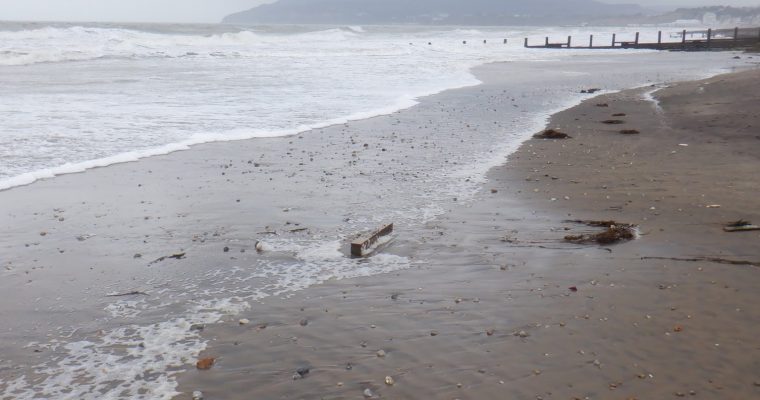
In some places though, regardless of sea state, there are a few things to bear in mind. It might sound silly to state the obvious but when the weather is stormy there is far more energy in the water in addition to the background tides and currents.

There is a measure of energy, kW/m which, when the sea state is calm, can be as low as 0.0kW/m. During Storm Babet, this rose to a peak of 16.02kW/m. This is huge! Not only were the waves enormous and relentless, they were powerful and capable of picking up the sort of debris that can cause serious injury.

If you are IN the water, with large waves, you can’t see what is heading your way and we have often pulled complete pallets and chunks of wood out of the sea. So although you may be able to cope with the waves, surf sideways, splash about and have fun, always be aware that its the debris you can’t see that could be more dangerous than the waves.

(The data for Sandown Bay is available in almost real time from the Channel Coastal Observatory who have a number of data buoys around England and the data can be invaluable for helping decide if it is safe to swim or not.)

Swim The Wight Van Sea Library

Swim The Wight Van Sea Library

Three new additions – I Found My Tribe, Wild woman Swimming and The Ladies’ Midnight Swimming Club as of April 2024 We have a small library in the van covering mainly the sea (unsurprisingly!). If you would like to borrow a book or magazine and 

Swimmers / Surfers Ear

Swimmers / Surfers Ear

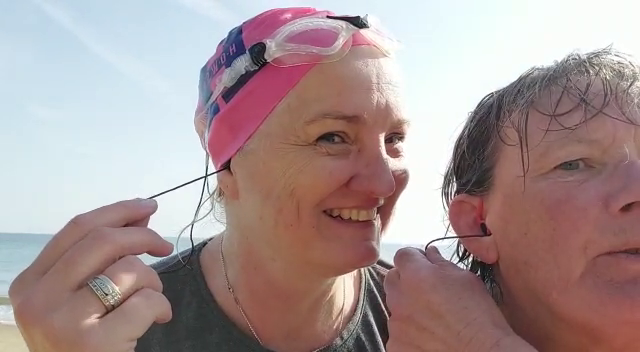
As the weather and sea warm, many of us feel the need to spend longer in the water than we would on a cold February day. For those of us who swim and immerse our heads into the water, there is a risk to develop 

Weever Fish Awareness

Weever Fish Awareness

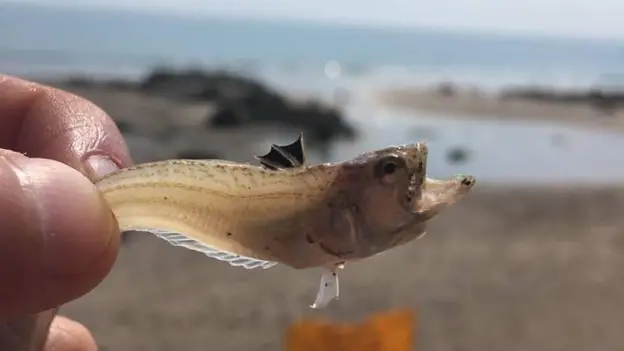
It’s close to that time of year when the issue of weever fish rears its head – or rather their spines.

There is quite a bit of good information out in the ether. https://www.wildlifetrusts.org/wildlife-explorer/marine/fish-including-sharks-skates-and-rays/lesser-weever-fish gives you a good understanding of what they are and when they appear.

Wear beach shoes! If you don’t have these, a pair of flip-flops will work (although they are awkward walking in the water). You can wade in, take them off, pop them up the back of your cossie (or in your tow-float) and hey presto! BUT remember to put them back on when you exit the water. And remember, weever fish can survive in wet sand so may be further up the beach than you think. As ever – take care 🙂

  • They appear from about June to October.
  • They can withstand quite a time out of the water so can be close to the high tide mark.
  • The stings are painful but not considered dangerous
  • Shuffle your feet around as you enter the water to scare them off
  • OR wear beach shoes and either pop them up the back of your swimsuit once in the water or use a tow float and put them in there.
  • If the beach is busy, watch to see if there is anyone hopping around in pain and avoid that area!
  • If stung, use the hottest water you can find and immerse the area. (A swimming hat and a flask of tea will work!)
  • The pain can be intense but shouldn’t last long (15 minutes to a couple of hours – depends on the individual.)
  • https://www.padstowsealifesafaris.co.uk/blog/weever-fish-stings/